Jacksonville Begins Construction on New St. Johns River Bridge
News Summary Jacksonville, Florida, has commenced construction of a new bridge over the St. Johns River to alleviate commuter congestion. The $150 million project focuses…
WHAT’S HAPPENING
- News Summary Jacksonville, Florida, has commenced construction of a new bridge over the St. Johns River to alleviate commuter congestion. The $150 million project focuses…
News Summary
Jacksonville, Florida, has commenced construction of a new bridge over the St. Johns River to alleviate commuter congestion. The $150 million project focuses on modern engineering methods, including earthquake-resistant technology and prefabricated sections to enhance efficiency and safety. This initiative also aims to improve regional connectivity, support local employment, and minimize environmental impact, reflecting bipartisan support for vital infrastructure improvements.
Jacksonville, Florida, Begins Construction on New St. Johns River Bridge
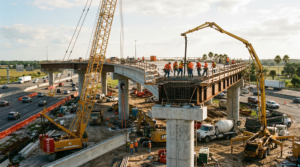
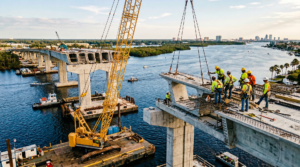
In Jacksonville, Florida, officials broke ground on October 6, 2025, for a new bridge over the St. Johns River. This $150 million project aims to ease commuter flow and reduce congestion by replacing an aging structure that has been prone to wear.
The initiative focuses on modern engineering techniques, including the use of earthquake-resistant technology to address potential risks based on past seismic events. Construction methods involve prefabricated sections, which are designed to speed up the building process and improve efficiency. This approach is expected to minimize disruptions for local residents and businesses.
Local reports indicate a high demand for skilled labor from unions, highlighting the project’s role in boosting employment in the area. Environmental assessments have ensured that the construction will have minimal impact on river wildlife, aligning with broader efforts to protect the ecosystem.
The bridge project supports regional growth plans by enhancing connectivity across Jacksonville. It received bipartisan support, reflecting a consensus on the need for infrastructure improvements to accommodate increasing population and traffic demands.
Project Details and Timeline
The new bridge is part of a strategic effort to modernize Jacksonville’s infrastructure. Engineers have incorporated lessons from previous seismic events to make the structure more resilient, using materials and designs that can withstand potential earthquakes. This is particularly important in Florida, where such events, though rare, could pose risks.
By using prefabricated sections, builders can assemble parts off-site and install them quickly, reducing the overall construction time and costs. This method not only promotes efficiency but also allows for better quality control during the manufacturing process.
The project addresses longstanding issues with the existing bridge, which has shown signs of wear over the years. Replacing it will provide a safer and more reliable crossing for daily commuters, potentially cutting travel times and easing traffic bottlenecks.
Broader Context and Benefits
This development comes as part of Jacksonville’s ongoing efforts to support regional growth. The new bridge will enhance connectivity by improving links between key areas, facilitating better access for residents and supporting economic activities. The $150 million investment underscores a commitment to infrastructure that can handle future demands.
Environmental studies played a crucial role in planning, ensuring that the project minimizes any negative effects on the St. Johns River’s wildlife. Measures include careful site selection and construction techniques that protect habitats, demonstrating a balance between development and conservation.
With the groundbreaking on October 6, 2025, the project marks a significant step forward in addressing Jacksonville’s transportation needs. It builds on previous infrastructure initiatives and reflects a collaborative approach with bipartisan backing, emphasizing the importance of such projects for community well-being.
The use of earthquake-resistant technology draws from national engineering standards, adapting them to local conditions. This ensures the bridge not only meets current safety requirements but also stands as a durable asset for decades to come. The high demand for skilled labor from local unions is expected to create job opportunities, contributing to the local economy during the construction phase.
Overall, this project exemplifies how targeted investments can improve daily life by reducing congestion and promoting sustainable growth. As construction progresses, it will serve as a model for similar efforts in other regions facing similar challenges.
FAQ Section
- Q: When did the groundbreaking for the new bridge in Jacksonville, Florida, occur?
A: The groundbreaking occurred on October 6, 2025.
- Q: What is the cost of the new bridge project?
A: The project costs $150 million.
- Q: Why is the new bridge being built?
A: The new bridge is being built to ease commuter flow and reduce congestion by replacing an aging structure prone to wear.
- Q: What technology is being used in the construction?
A: Engineers are incorporating earthquake-resistant technology, learning from past seismic events.
- Q: How is the construction being carried out?
A: Construction involves prefabricated sections for efficiency.
- Q: What about labor for the project?
A: Local unions report high demand for skilled labor.
- Q: How does the project affect the environment?
A: Environmental studies ensured minimal impact on river wildlife.
- Q: How does this project fit into larger plans?
A: The project aligns with regional growth plans, enhancing connectivity.
- Q: Who supported the project?
A: The project has bipartisan support.
Key Features Chart
| Feature | Description |
|---|---|
| Cost | $150 million |
| Purpose | Eases commuter flow and reduces congestion |
| Technology | Earthquake-resistant technology |
| Construction Method | Prefabricated sections for efficiency |
| Labor Demand | High demand for skilled labor from local unions |
| Environmental Impact | Minimal impact on river wildlife |
| Alignment | With regional growth plans, enhancing connectivity |
| Start Date | October 6, 2025 |
| Support | Bipartisan support |
Deeper Dive: News & Info About This Topic
Construction FL Resources
UNF’s Hicks Honors College Receives $14.84 Million for New Building
Deeper Dive: News & Info
HERE Construction Network
Upcoming FL Construction Events

Author: James Rivera
Infrastructure Reporter. Covers FDOT contracts, highway expansion, and transit projects across Florida. Former civil engineer with 12 years in highway design before transitioning to construction journalism.